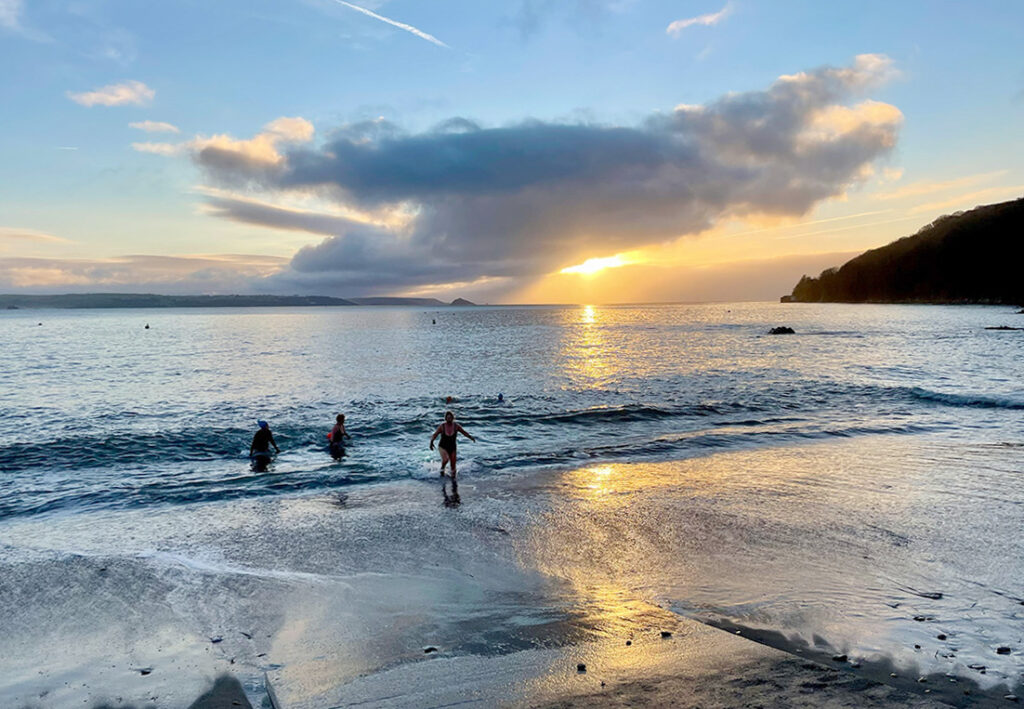
I have been outdoor swimming (mainly in the sea) all year round since November 2017.
Outdoor swimming is wonderful; in my experience it has improved my immune system, helped me negotiate hard times and made me feel very alive. However it is not without risks; and sadly these risks have been at the fore in the news this winter. I am hoping this guide will help with the understanding of risks, and how to swim safely. When done sensibly there are few things more joyous or life-enhancing than being immersed in nature in cold water, with the sun glowing, cormorants diving just a few feet away and seagulls circling overhead.
In my eight-plus years of outdoor swimming I have made mistakes, and learnt the hard way how easily things can go wrong. I therefore have a set of rules that I thought I’d share, before outlining my favourite places for an outdoor swim.
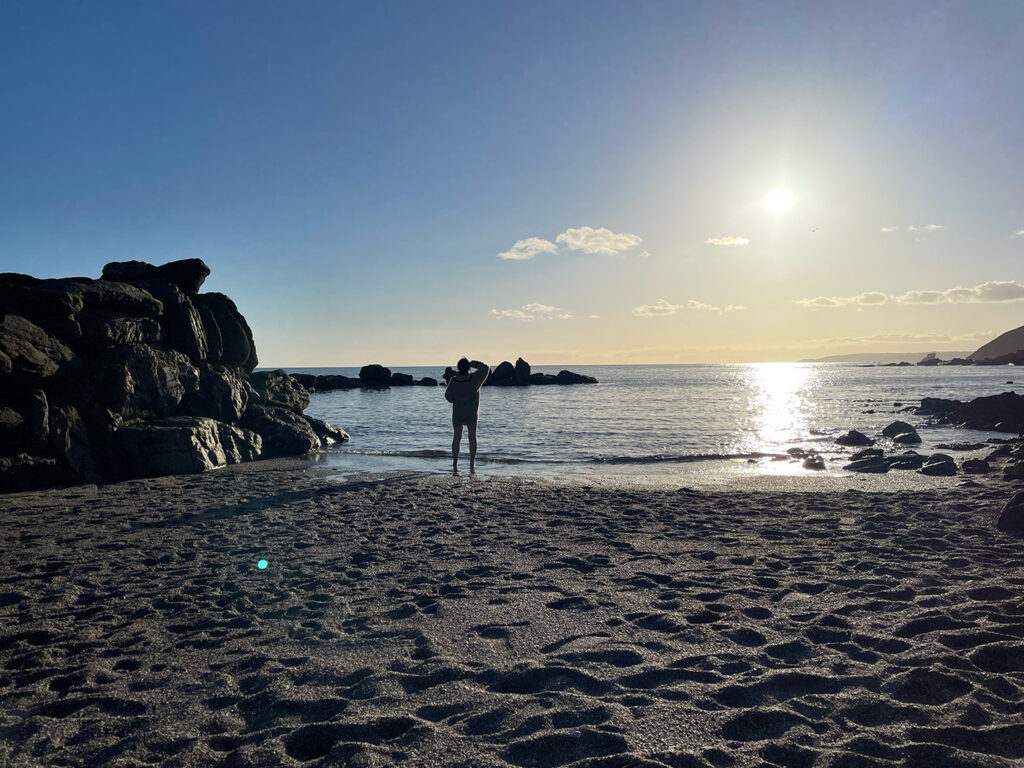
- Never take risks! This rule is absolutely non-negotiable. If the water is cold, only stay in for a very short time. If the sea is rough, accept you won’t be going in. If there is a seal in the water, stay close to shore in case it becomes too curious. Take a bag with you to the beach and if conditions aren’t right for swimming walk along the shore and do a litter pick. That way your time is not wasted. If in doubt, even the smallest niggling one, don’t go in.
- Never jump into cold water; your body will react with a gasp reflex, which can lead to inhaling water, and potentially drowning. Always enter the water slowly.
- Never ever enter the water if you are under the influence. Statistics show that over 25% of drownings are drink related.
- Before you start, learn how to get out of danger by watching the RNLI advice video RNLI float to live.
- Always swim with at least one friend. More is better, and even better still have a friend looking out for you on the shore.
- Know the place you are swimming. Talk to people. Where are the potential hazards? Is there a place where the sand shelves, leading to a deep drop? What point of the tide is the safest to swim? Long beaches are often notorious for rip-tides and should be avoided in all but the flattest of seas.
- Check sewage alerts at SAS’s Sewage Alert Page
- Your limitations are your limitations. Other swim buddies may be comfortable swimming further from shore, or staying in cold water for longer. Be firm and stick to what you are comfortable with. Any worthwhile swim buddy will respect this. Outdoor swimming is not a competition.
- Wear a swimming buoy, especially if there are boats sharing the water with you. This will make you easy to see and help your confidence. You’ll also have somewhere to put your phone and keys, as many have a built-in bag. However swimming buoys are only to be recommended in still weather and flat seas. Add waves or wind to the mix and they can reduce safety.
- Stay in for no more than a minute per degree of sea temperature.This will reduce the chances of developing hypothermia.
- Take a flask of warm water to drink after your swim. After being immersed for any length of time you will find your teeth chatter, your hands shake and we often find ourselves laughing. This is all part of the body’s armoury in keeping you warm. When in cold water the blood closest to the surface goes inwards. When you get out the blood flows back again, and is cooled by your cold skin, leading to a further significant drop in temperature (know as the after-drop). Getting warm fluids into your body will really help negate the worst of this.
- Get dressed quickly afterwards. Move about. Don’t rub your skin. If you don’t have much natural padding, wear a rash vest or wet suit. Different people are able to tolerate different levels of cold; learn your limits. I personally never enter the water without a hat, gloves and booties. Learn more about hypothermia at https://www.nhs.uk/conditions/hypothermia/ so you can recognise the signs.
- The sea is at its coldest in March, and from January is frequently in single figures. A quick dip may well be enough. Avoid swimming too far from shore in winter; you need to be able to exit quickly when you feel you’ve had enough.
- Avoid signing up to schemes that encourage risk; eg swimming every day, staying in for a certain length of time or not wearing enough protective clothing for your physique. Outdoor swimming is only safe if you dictate the rules. If you want to support a charity find other ways to do so.
- If you start to feel warm, get out straight away! It can be a sign of hypothermia.
- If you have any health issues, always consult with your doctor it will be safe for you to outdoor swim.
- Never, ever, ever take risks. I know this is a repetition, but it is the most important rule. Remember it’s not just you; it your family and the family of those who come to your rescue.
My favourite swimming spots, and a guide to safety at each.
Cawsand
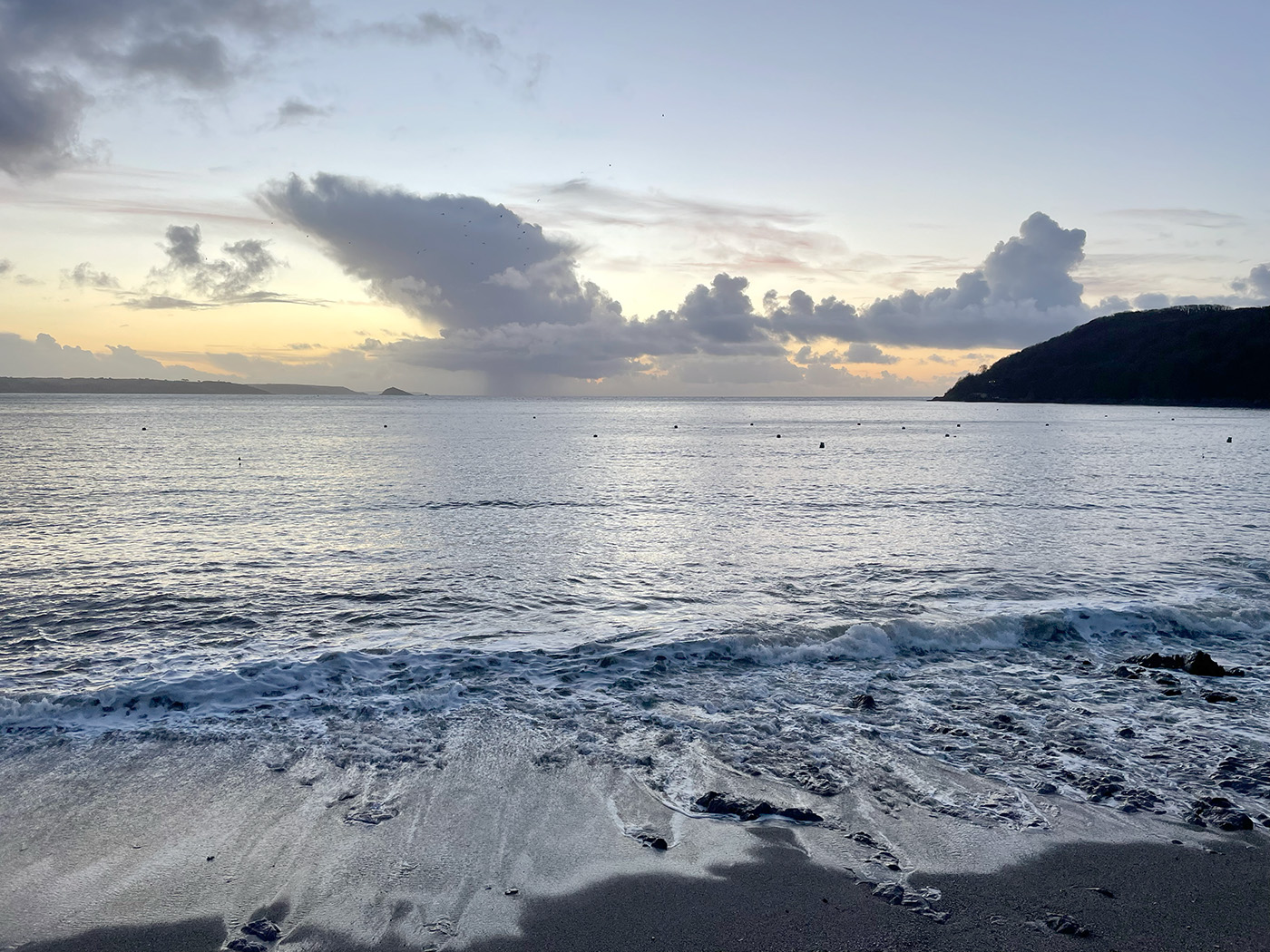
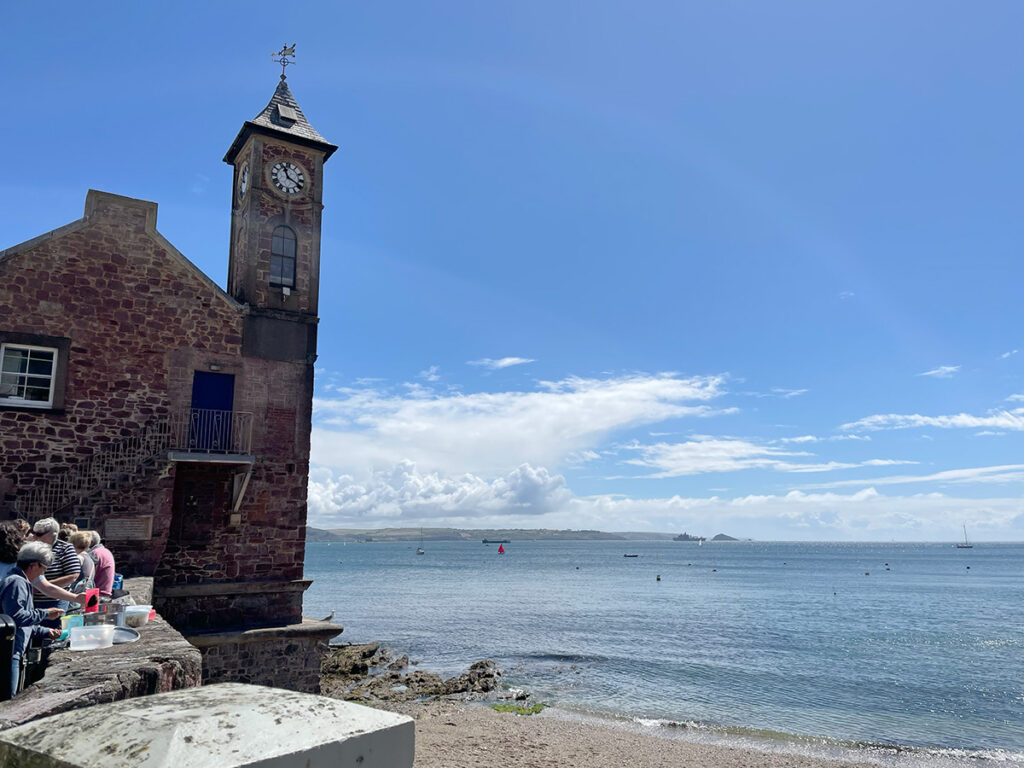
This is a really popular swim spot. When Whitsand bay is crashing with surf after strong south-westerlies, Cawsand’s sheltered bay will be as calm as a millpond. Parking is easy, with a car park just a short walk away. The beach is dog friendly, there is a shelter to change in, with toilets next door. Benches on a concrete plinth at the back of the beach offers a good viewing spot for non-swimmers. For experienced swimmers, there are swim bouys to aim for, and rock-pools to swim through, while beginners can do lengths of the bay (my prefered option in winter.
There is the added bonus of an excellent restaurant right beside the bay, that do fine hot chocolate and soup.
Potential hazards:
The beach shelves steeply, so unless the tide is right out, the water gets deep quickly. This makes getting in easy (no long wades) but if you like to feel the ground beneath your feet may take a bit of getting used to.
In the summer the ferry comes hourly into the bay. Be aware of the times and watch out for its arrival so you can avoid swimming into its the path. A swim-buoy will help you be seen.
Cawsands gets choppy when the wind is north or easterly. Luckily this is fairly infrequent, but do be prepared to bail out if it is rough.
Nearby Kingsand beach is also popular with swimmers. If you want company arrive at 8am, when a regular contingent of swimmers will be in the water.
Portwrinkle harbour
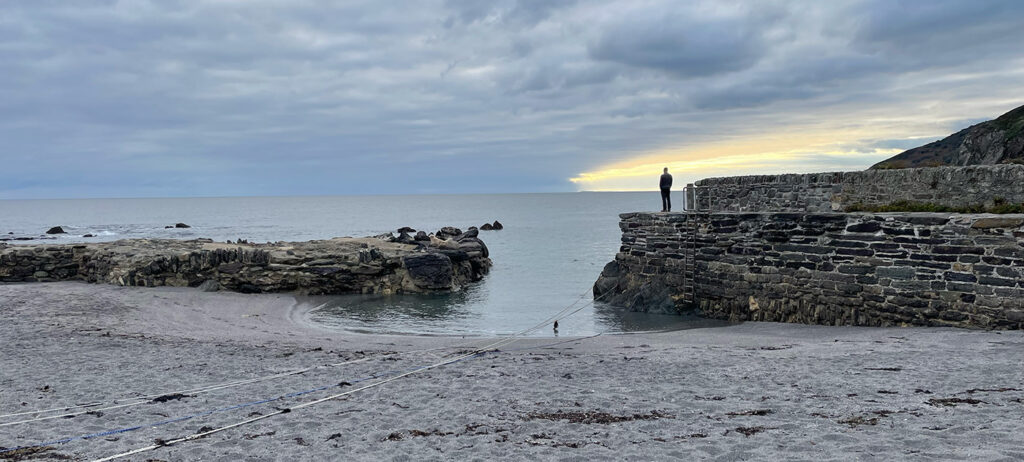
There are two beaches at Portwrinkle, with a harbour in between. At low-mid tide it is possible to walk between the beaches. It’s an excellent location for rock pools and shells. There is a car park and a small cafe.
Portwrinkle harbour is my personal favourite swim spot. From the harbour you can swim out and across the bay. However it is a trickier swim than Cawsand as there are more hazards. Generally it is safe when the sea is flat, but at other times more caution is required.
There is a flat area for sitting on, perfect for bags. There is no shelter.
Portwrinkle harbour is safest at mid tide, when the outer harbour wall is exposed. This gives protection from the swell, offering a decent sized sheltered body of water.
Potential hazards:
There are a lot of rocks under the surface. If swimming parallel to the beach, swim out before going across. Learn where the channels are. If the sea is flat and the tide is very high, this is less of a problem.
A rip-current forms between the harbour walls when the inner harbour is more than about a third full. This can be dangerous; I’ve been caught in it and would never wish to repeat the experience. If there is a bit of a swell and the tide is fairly high, be content with just bobbing about in the inner harbour.
Seaton
Seaton is a very popular beach, particularly with dog walkers. Car parking is easy and right beside the beach. There is an excellent cafe. The beach is long, with a river running into it. I have friends who swim at Seaton most days. There is an RNLI lifeguard service at Seaton in the summer.
Potential hazards:
Like all the south coast beaches Seaton catches the south-westerly winds. The beach is fairly steep, so goes deep relatively quickly when the tide is in. It is safest at low tide, when the terrain flattens out and stays shallow for quite some time. On a calm still day Seaton is a fabulous place to swim.
The river can cause odd currents, so swimming in the east end of the large beach is the most sensible option. It also means it can be prone to problems with sewage; check reports, especially after heavy rain.
Millendreath
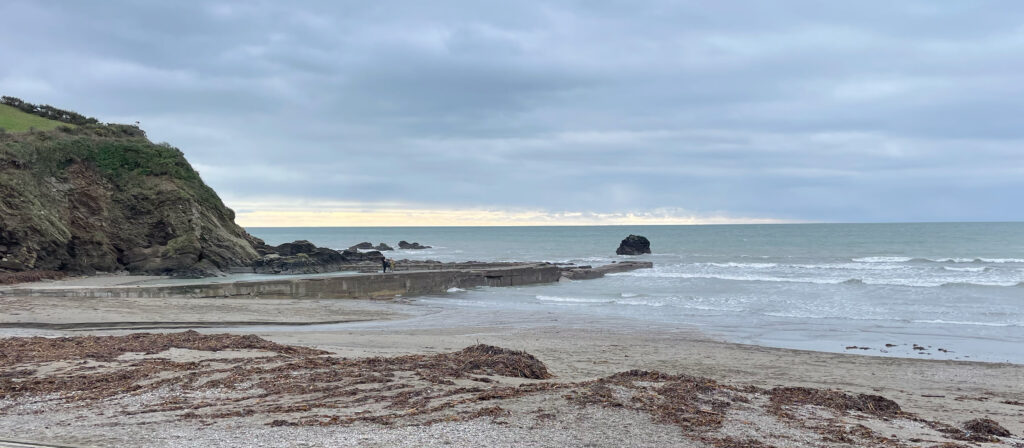
Millendreath is a sheltered bay with a sea pool, making it a good option when the tide is fairly low but the sea is too choppy to safely swim. There is a large car park and a cafe.
Looe
Looe is easy to reach by public transport, and has all the bonuses of a seaside town, with nearby cafes for a warm up drink. It is quite a sheltered bay, and there are usually plenty of people around. The beach is sandy.
Goldiggins Quarry
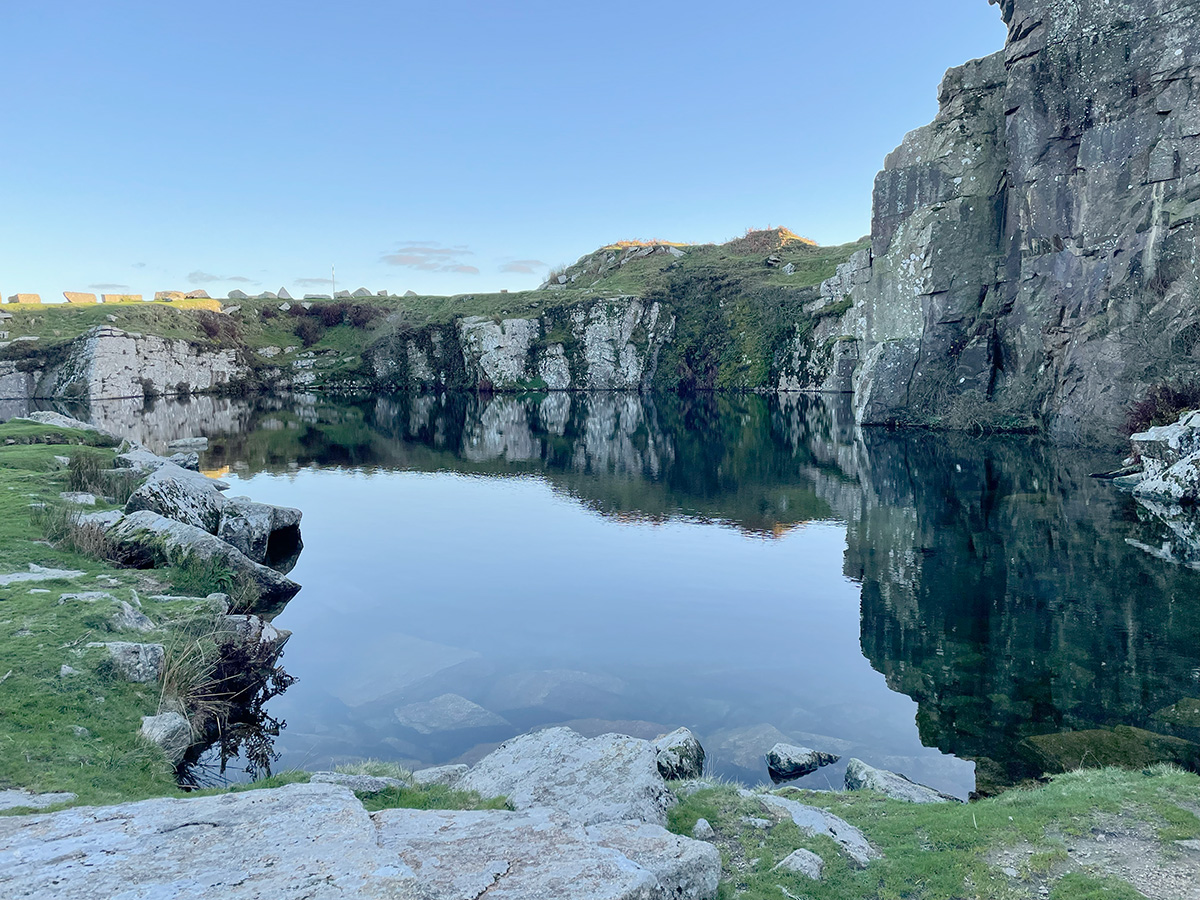
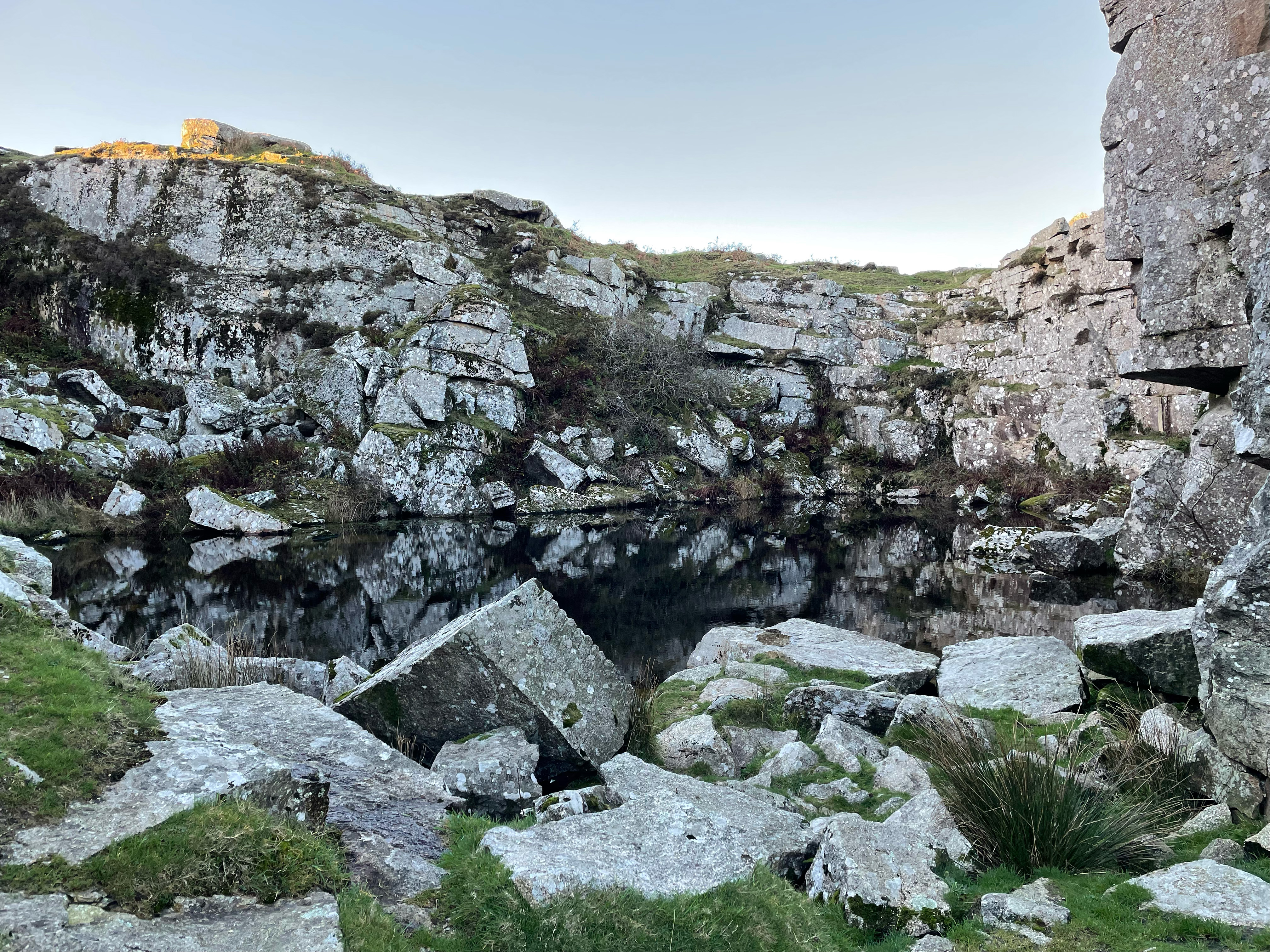
Goldiggins Quarry is about a mile’s walk from Minions. Set in the depths of the moor, it really is a very atmospheric place. There are two quarries; the outer one is large and very deep. It is popular in summer. The inner is rockier and shallow, making it a good option if you just want to immerse for a few moments, rather than properly swim.
Goldiggins is remote, with no facilities. In the winter, like all quarry ponds, it is very cold; much colder than the sea. Dip with caution and just for a very short length of time; in the winter resist the temptation to strike across the lake. Always take at least one, and preferably two friends as company. Here you will be very glad of your flask of warm water and someone to hold up a towel for you as you get out.
Outdoor swimming can be wonderful. Take care and you will be rewarded with a life-enhancing experience like no other. And if you find the conditions aren’t right, enjoy a walk or simply watch the waves instead. There’s always another day.