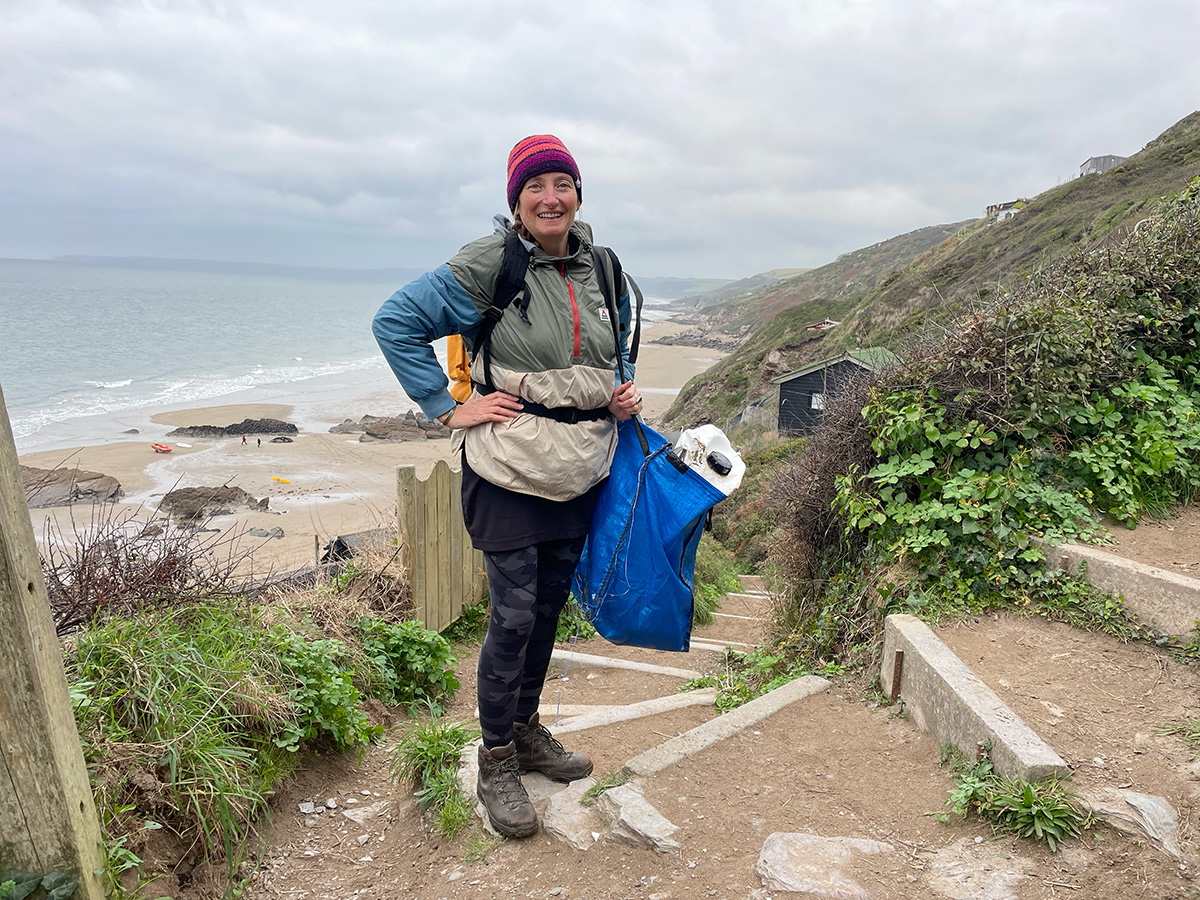
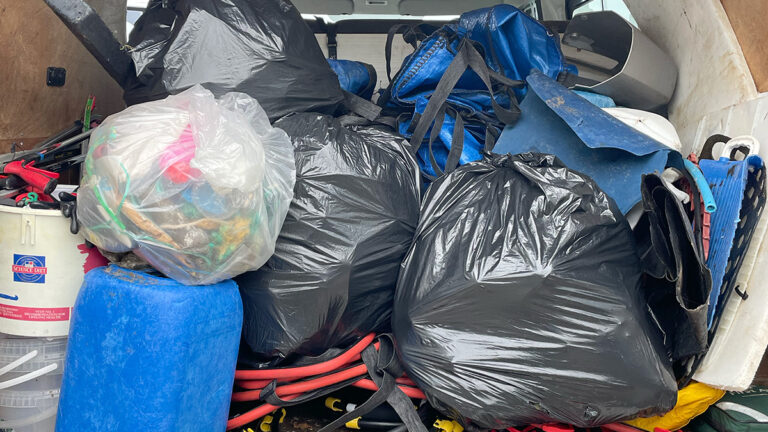
What weather we have been having! The stormy seas and full rivers have bought in large quantities of plastic beach waste, so over the last few weeks I’ve been filling bags with rubbish.
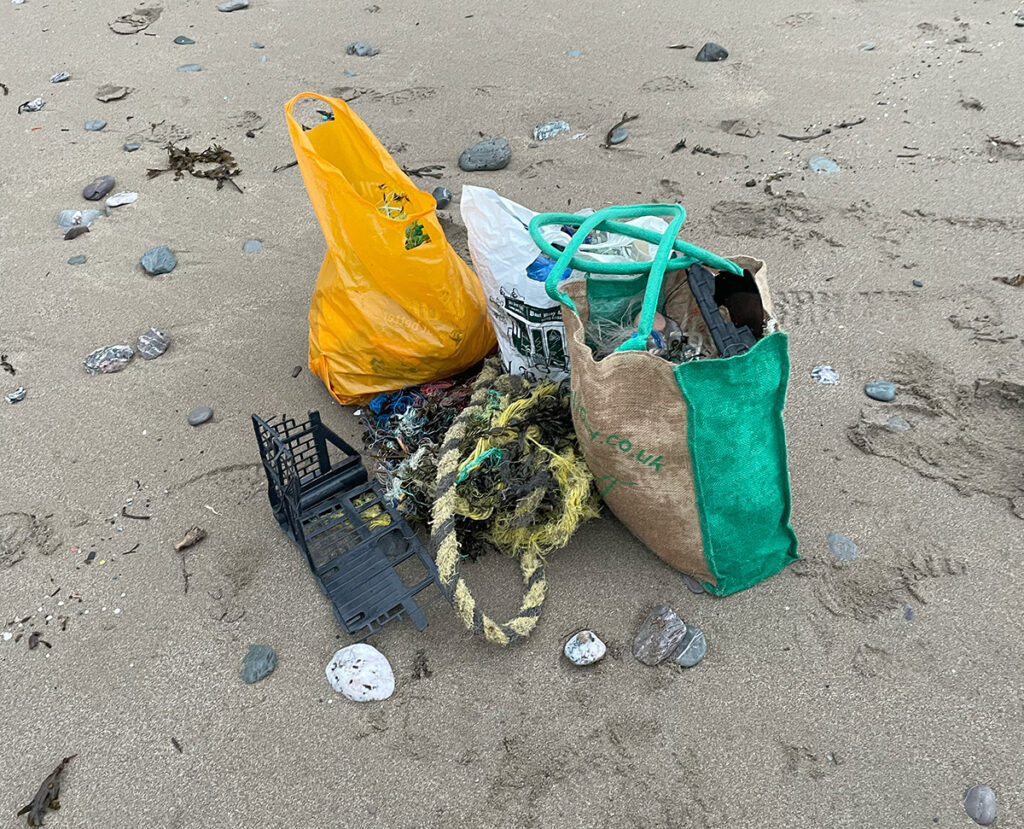
A sizeable portion of the rubbish is fishing waste; broken lobster pots, ghost nets, filament and fish boxes. There’s bits of cut net, which always makes me cross, as it seems likely it is casually thrown overboard.
Some items are locally discarded on beaches, often accidentally. Broken brightly coloured buckets and spades, swimming costumes, flip flops, crisp packets and drinks bottles are often in this category.
Then there’s jetsam from containers, often in bulk. A few years ago we were finding sizeable quantities of toothbrushes, plastic bleach bottles, lego and zippo lighters that had all come off a container ship. These still drift in, but are becoming less common.
However the majority of rubbish doesn’t come from the sea, but comes from our own households. Rubbish that has blown from bins, or been thrown from cars, or escaped from recycling plants.
One of our society’s biggest problems is that we have outsourced the disposal of plastic to the consumer, rather than tackling it at source. Those of us in the environmental movement know that recycling is no panacea; very little of what goes into the recycling bin is actually recycled, and inevitably some of it will find its way back into our countryside and seas. And what isn’t recycled is burnt, which isn’t too good either. For more, do please read my article Society is a great consumer, but what do we do with the waste?
Here are some suggestions for reducing plastic, both at home and within the wider environment.
When we go to supermarkets we are presented with acres of plastic. Consumers have little option but to buy plastic wrapped items. You can do as we do and avoid supermarkets by buying from local shops and having a regular vegetable box delivered. Our organic veggie box from Keveral Community of Growers is personally tailored (we request no potatoes and extra greens) and ensures we have quality veg in a box that can be reused many times. If you are in a city, buy from a greengrocer or market stall, and take your own bags to put fresh produce in.
Write to your supermarket and explain you do not wish to buy groceries in plastic. Write to your local MP and ask what they are planning to do to tackle plastic pollution. You can find your MP’s address here.
If you buy propriety cleaning fluids, look at the contents of your cupboard. Much of it will be in plastic bottles. Buying refills is one option; green cleaning companies such as Method offer this service, but only in small quantities. Alternatively you might wish to buy eco-friendly cleaning products in bulk from somewhere like The Green Stationary Company. We find a 5 litre container lasts for ages; simply keep refilling your original bottle.
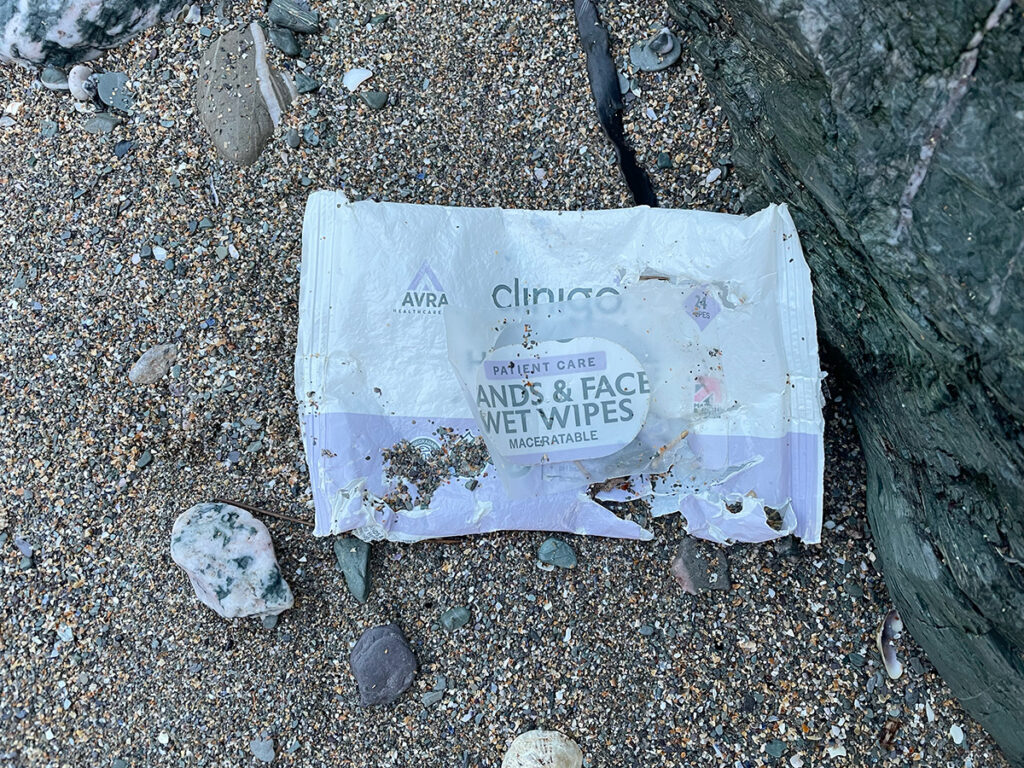
Make your bathroom plastic free. Use shampoo bars. There are lots to choose from on the market. If you’ve tried in the past and been disappointed, try again, as I’ve noticed a big improvement over the last few years. They are often more expensive than a bottle of shampoo, but do last longer. This month I am also experimenting with toothpaste tablets. Look out for deodorant in cardboard tubes. Use a flannel rather than wet wipes.
If you are lucky enough to have a local refill shop, then do use it. This will cut your packaging considerably and help a small business survive.
Store in glass rather than plastic. Although plastic containers are not single use they will, after a time, leach plastic into your food. I have tried to get into the habit of jarring food such as cooked fruit and leftover soup. (Heat the jars. Use a pre-heated pyrex jug to carefully pour the food in while still piping hot, seal, turn the jar upside down to sterilise the top. As long as the top is on tightly this will preserve your food for ages.)
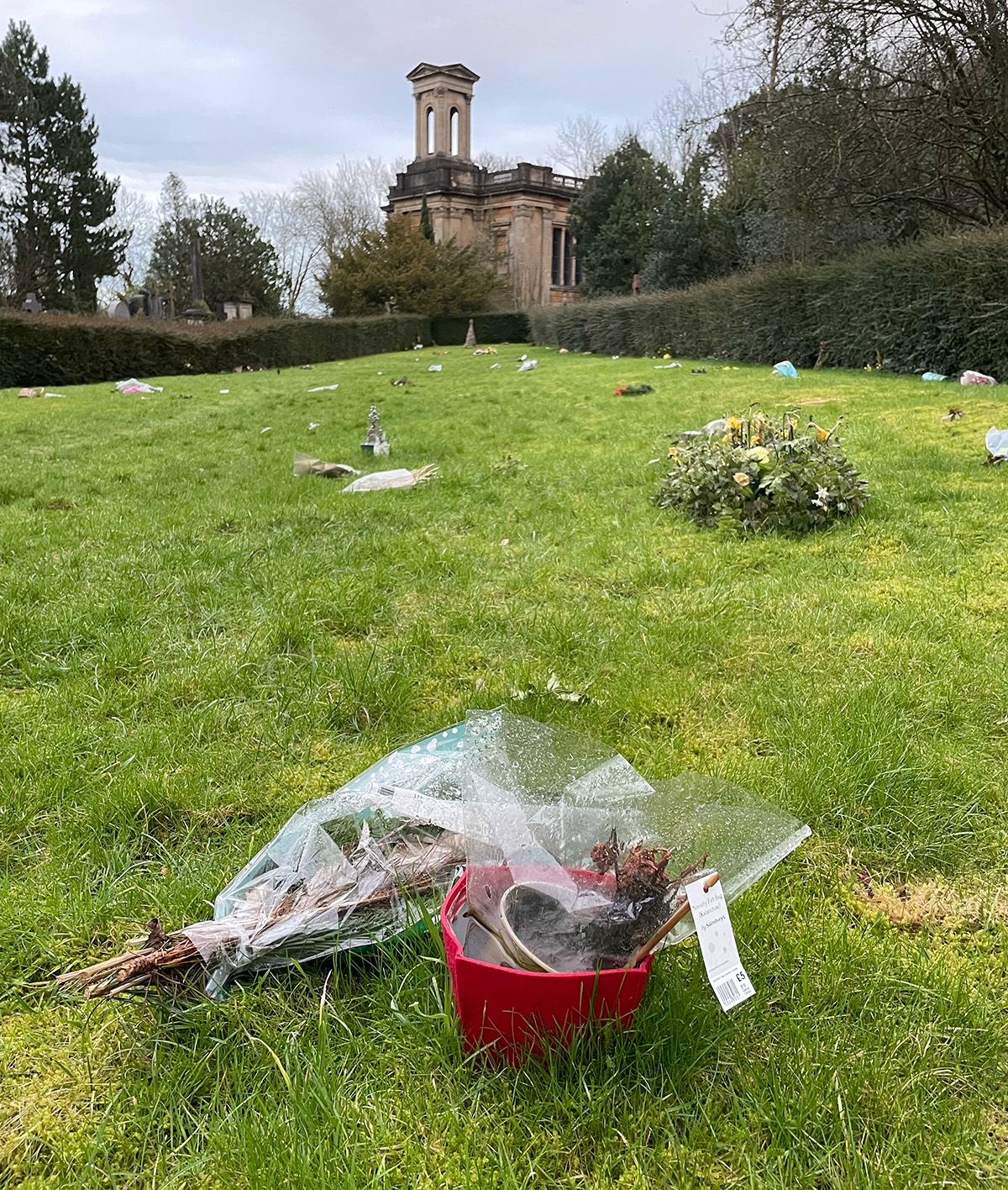
There are places where plastic waste is packaging for grief. Visiting a cemetery with a friend who’d lost her sons I was appalled to see how much plastic bouquet wrappings and plastic plant pots were littering the gardens, long outlasting the flowers. The same is seen at shrines by roads and other places where tragedy has occurred. Laying flowers in wrappers outsources the problem of the plastic to an undesignated third party. When laying flowers, please take the wrapping away with you. The flowers will be more beautiful for being seen. And rather than putting a pot of plastic flowers on a grave, a clay pot with a plant or bulbs will stay fresher and last far longer.
Avoid balloons. During a beach clean a few months ago I saw a party come down to the shore with two heart shaped helium balloons. They were clearly coming to spread ashes. They let the balloons go and I watched in horror as they drifted off over the cliff, to become plastic beach waste of the future. I decided it wasn’t fair to chastise; as a society we have made this sort of casual littering acceptable. But please make this sort of action one of the past; there is nothing to be gained from the small dopamine thrill of watching a balloon disappear, but much to be lost.
Know where your fish comes from and only buy line caught fish. Make eating fish a treat and chose quality over quantity. Trawlers and commercial fishing cause untold damage to the ocean environment.
Pick up other people’s rubbish. It’s really annoying, but if we don’t it will make its way to the coast. And if you are lucky enough to live near the coast, get beach cleaning. If you join a group it can be a great way of making like minded friends. If you want inspiration, do follow plastic-free champions like Action Nan or Just A Girl Cleaning Beaches on Instagram.