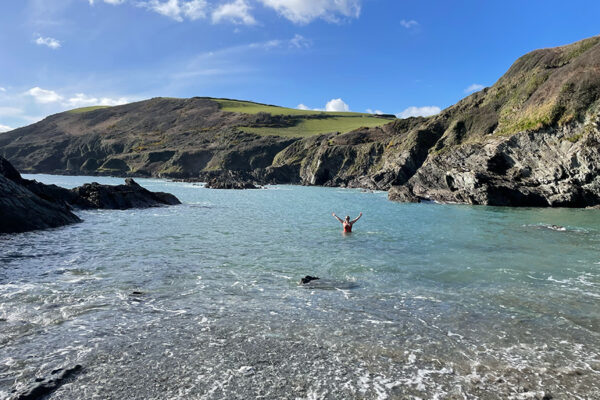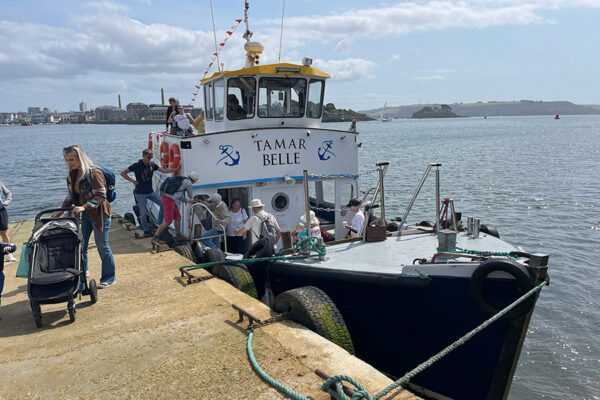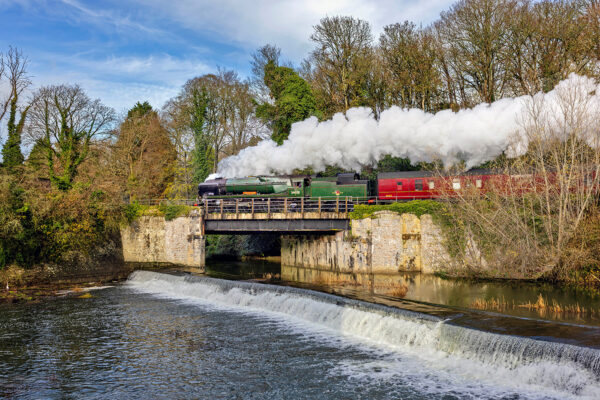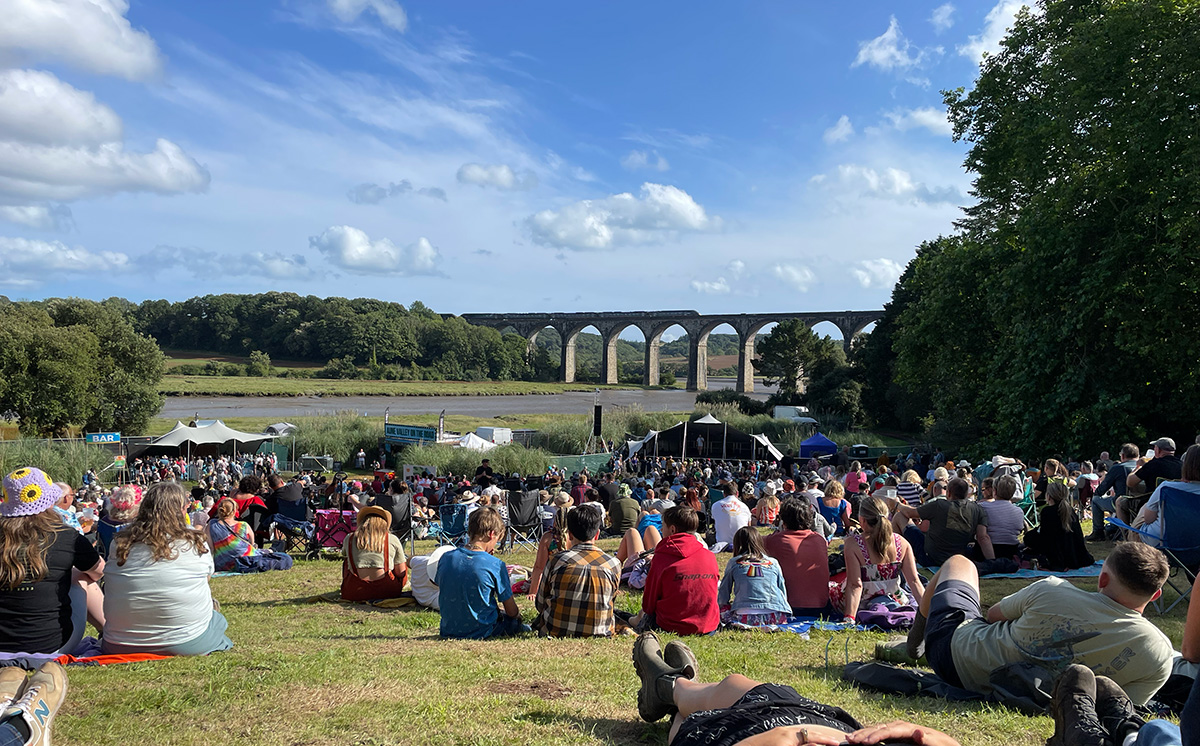
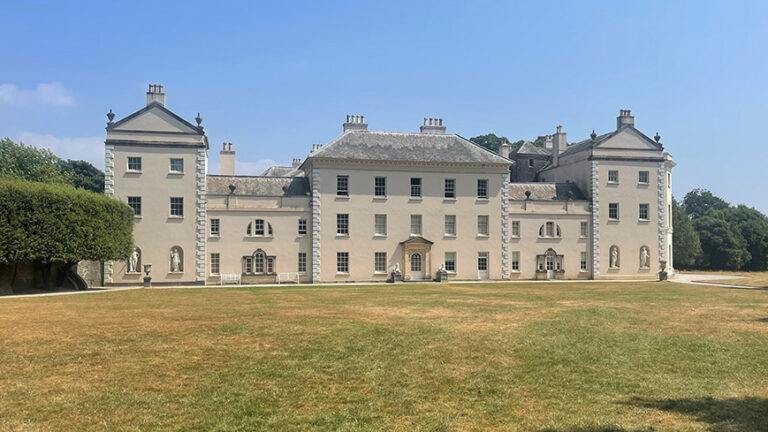
Saltram House is a grand house just a few miles from Plymouth City Centre, with some superb art work, and plenty of parkland to roam around. This walk is an easy, flat meander from the centre of Plymouth; not the most scenic, but quite interesting as it takes in industrial areas and the TR2 theatre, before heading along the Plym river. I’m starting this walk from the Barbican, so that in the summer months it can be combined with the ferry from Saltash, detailed in a previous blog post, How to Explore the Royal William Yard and Mount Edgecumbe by Train and Ferry. The Barbican is a twenty minute walk from Plymouth station.
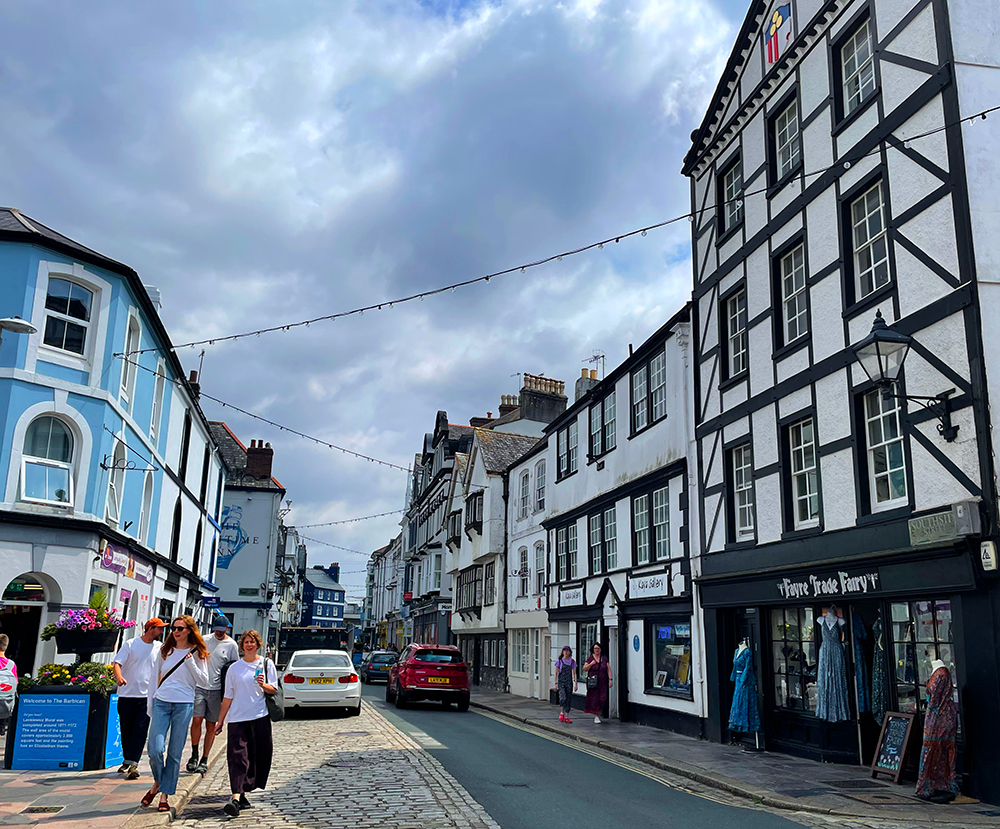
Start your walk by crossing the pedestrian bridge that leads past Plymouth’s National Marine Aquarium. You could stop to admire the Pilgrim Steps en-route, where the Pilgrim Fathers left for America. From here follow the cycle route 27, firstly along the road, skirting Coxside, once the heart of Plymouth industry, but now home to a giant cinema multiplex and nightclub. Before you get to this area, follow the signs off to the right to catch a glimpse of Queen Anne’s Battery before following quiet roads through Cattedown. Here Plymouth’s industry is in full swing, as the route passes docks and a scrap yard.
Cattedown has an interesting history; this area is filled with caves, which are now fenced off. Wikipedia states “In 1816, caves containing human bones were discovered in Cattedown when a “bone bearing fissure” was found by a “Mr Whidbey”, the caves were further discovered and excavated by two archaeologists in 1886 who discovered human bones while mining in a quarry. During the excavations traces of charcoal were found, leading archeologists to believe that early humans were living in the caves, and were potentially the first people to live in the Plymouth area. Bones of woolly rhinoceroses, reindeer, hyenas and a woolly mammoth from the ice age were also found.”
“Among the partial skeletons of 15 early humans found in the caves was the famous ‘Cattedown Man’ – believed to be the city’s earliest known inhabitant and dating back 140,000 years. Archaeologists say he could potentially be the oldest human found in Britain. Further caves were found around the city in the 20th century including those at Stonehouse, Oreston, and Turnchapel. Today, the caves – listed as a national monument by Historic England remain fenced off and closed to the public.”
There is a fascinating display about these caves in Plymouth’s excellent museum The Box. If you are coming from the train this could be an interesting detour either before or after this walk, as The Box is en-route to the Barbican from Plymouth train station. You can also read more about the Plymouth bone caves here.
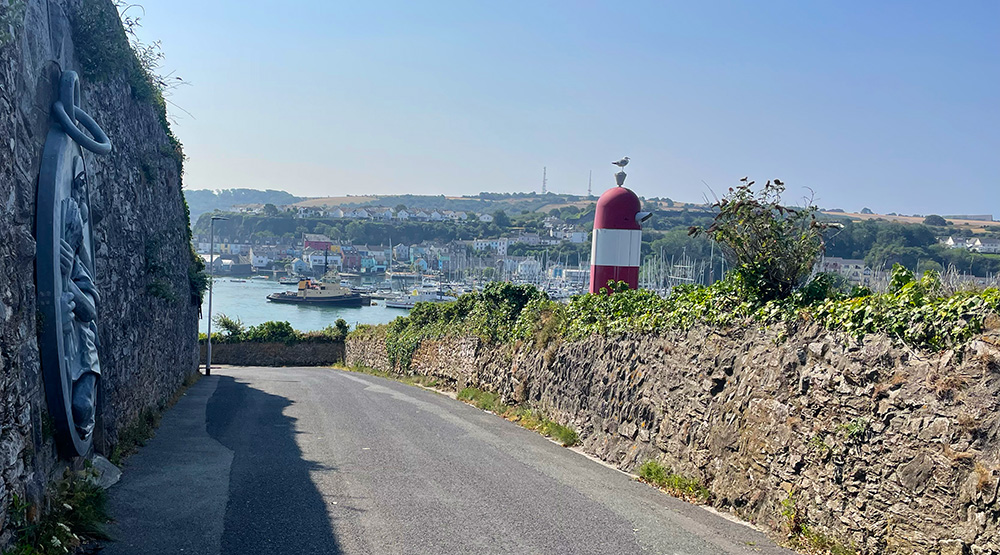
Heading towards Queen Anne’s Battery you can glimpse the village of Turnchapel, with its pontoons, Plymouth Yacht Haven and Boringdon Arms, traditionally famous for its choice of real ales.
In the heart of Cattedown is a hidden arts gem; the TR2, This full sized theatre stage is used by world class companies for set building, prop manufacture, education and to rehearse new productions before they reach London’s West End and beyond. The location of the TR2 means that Plymouth’s excellent Theatre Royal has a vibrant programme, often hosting first performances of musicals and theatre before they go out nationally.

Head past the TR2, and past Plymouth Boatyard and Marina on the right, to cross the road and onto Laira Bridge that straddles the Plym river. This iron bridge was originally built by the London and South Western Railway for a branch line that terminated at Turnchapel. Later it was used by GWR, providing access to the Yealmton Branch at Plymstock. It was converted into a walkway and cycle trail in 2015.
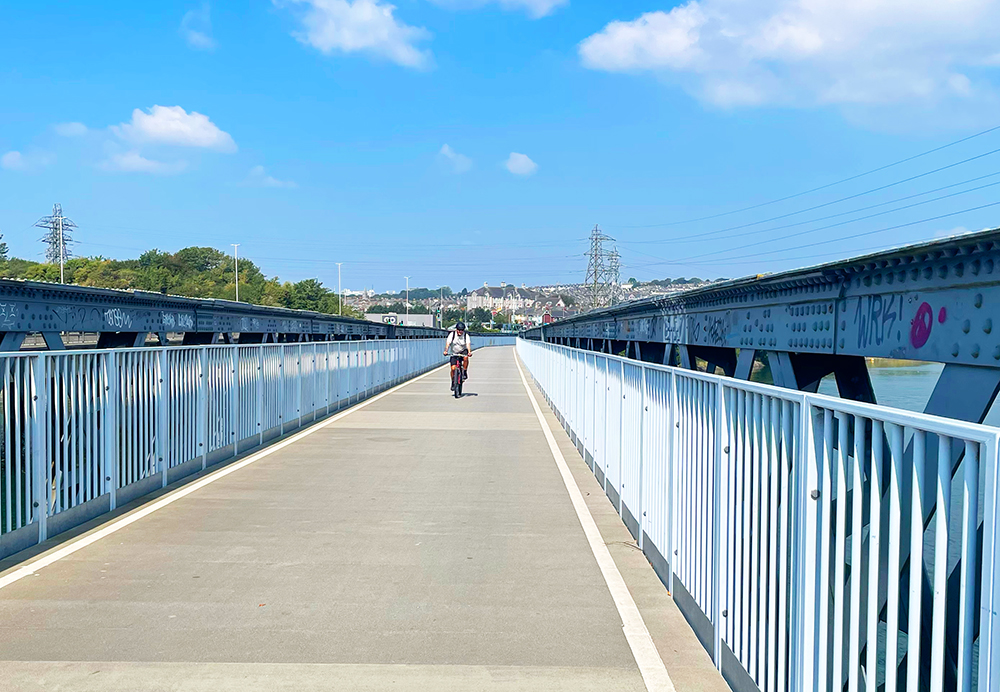
After the bridge follow the path on the right to go under the bridge and along the river path. To the right is Chelson Meadows Recycling Centre, formerly the old municipal landfill site, but now transformed into a pleasant river walk with adjacent cycle path. Across the river is the A374, the main trunk road into the centre. The difference between the two sides of the river is marked; on one side a continual flow of traffic, on the other a gentle path punctuated by runners, dog walkers and toddlers on bikes. Follow this path until you arrive at a small beach, where a path leads off to the right towards Saltram House.
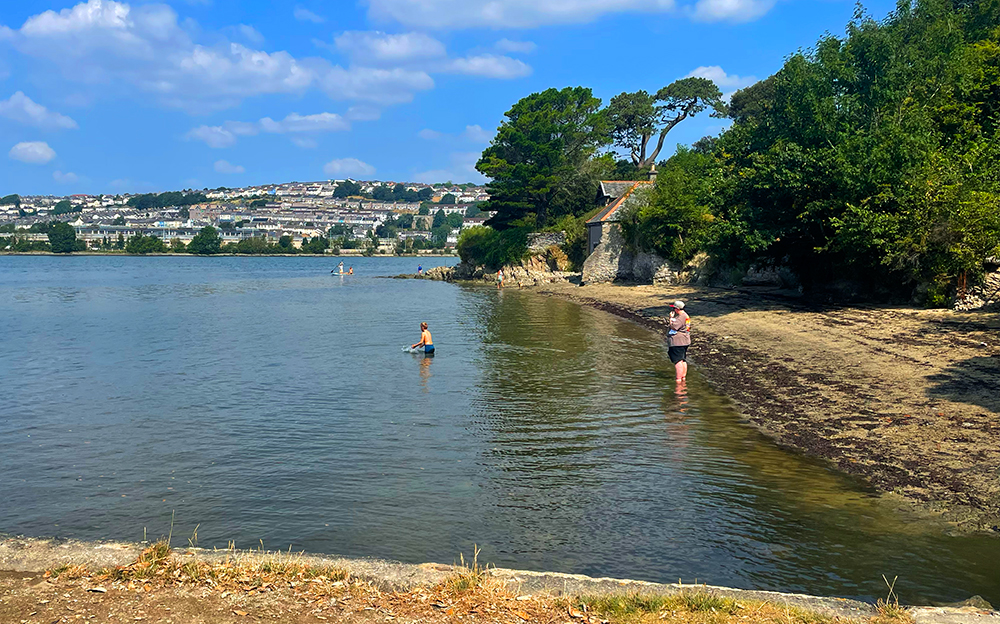
From here Saltram is about a mile, but the road is well paved and easy going, with pleasant pastoral scenes on both sides; gentle rolling hills and cows grazing.
Saltram is a National Trust house, so is included in a National Trust Membership. For non members the cost for the gardens in 2026 is £9.50, and for house and gardens £16.00.
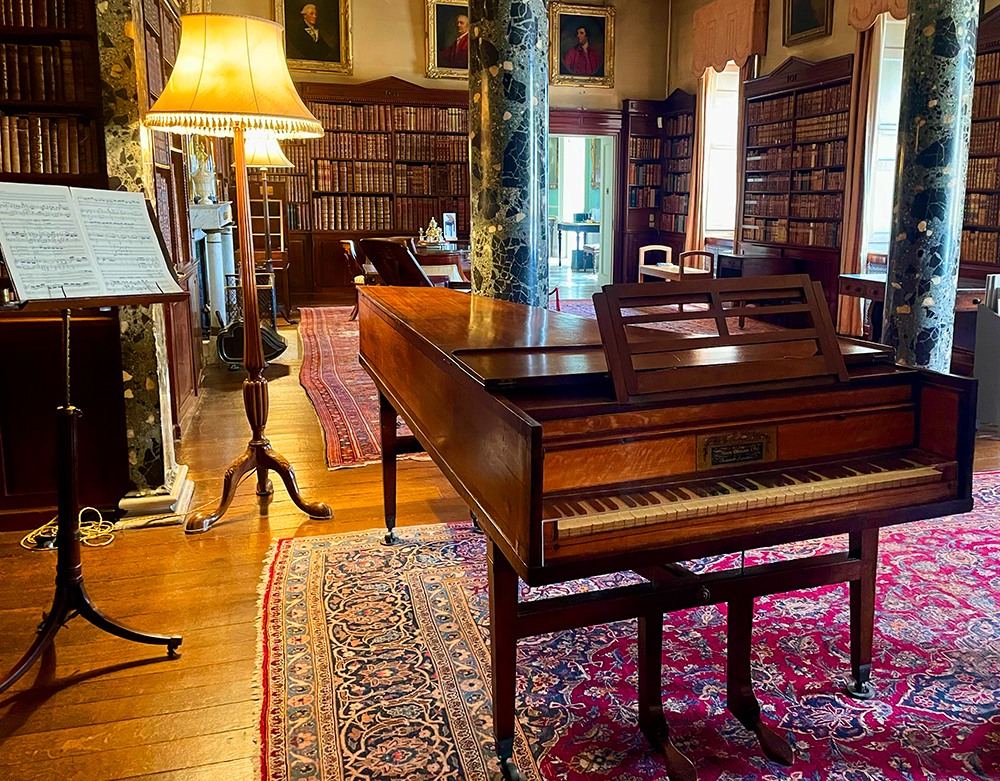
We highly recommend visiting inside the house. The interior ceiling plasterwork is extraordinary and there are some fabulous pieces of art; many by Joshua Reynolds and his contemporaries. There are some fine pieces of furniture, a beautiful Axminster carpet in the ballroom and hand painted Chinese wallpaper in the study. In addition there is a choice of two excellent cafes serving homemade cakes, ice-creams and lunches, and a secondhand bookshop.
Joshua Reynolds (1723-92) is famed for his portrait paintings, and achieved great acclaim during his life. He was born in Plympton, the third son of Reverend Samuel Reynolds, master of the Plympton Free Grammar School in the town. The family were very artistic; Reynold was very inspired by the drawings of his older sister, the author Mary Palmer. She would later fund Reynold’s studies with the portrait painter Thomas Hudson and advance money for an Italian art tour; investment which must have more than paid off in the long run! Reynolds’ other siblings include the artist Frances Reynolds and the political pamphleteer Elizabeth Johnson.
According to Wikipedia, Reynolds was one of the earliest members of the Royal Society of Arts, helped found the Society of Artists of Great Britain and in 1768 became the first president of the Royal Academy of Arts, a position he was to hold until his death. In 1769, he was knighted by King George the third, only the second English artist to be so honoured.
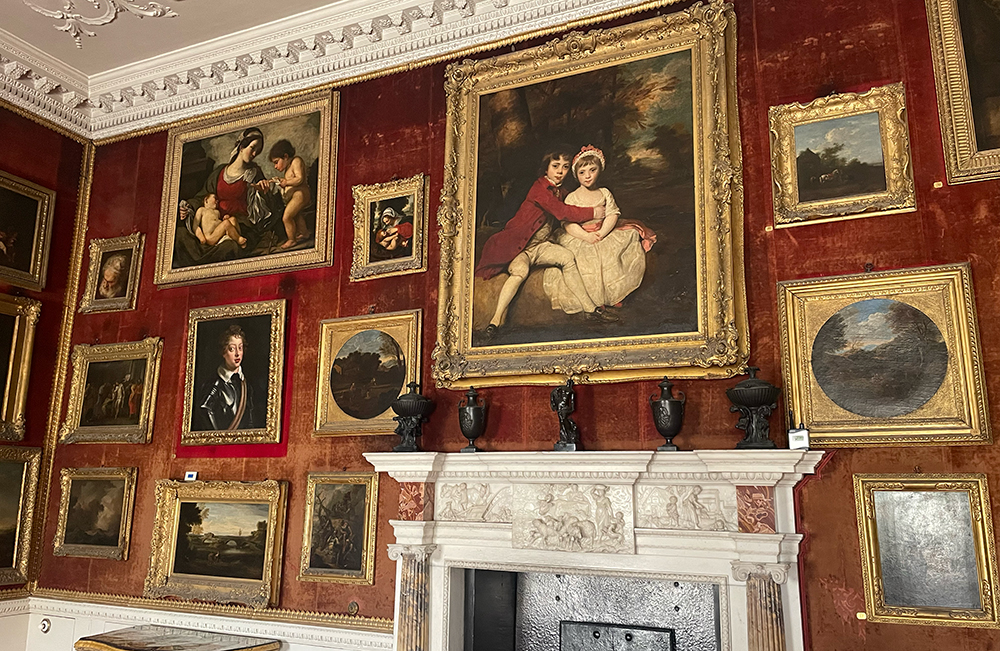
Joshua Reynolds’ friendship with the Parkers, who owned Saltram House, was a fruitful one. He painted numerous portraits of the family, and also used his knowledge of Italian art to advise them on their collection, which includes paintings by many of the finest Italian masters.
A Joshua Reynolds’ painting (along with some by Van Dyck) can also be seen at Port Eliot, the stately home in the village of St Germans, only a stone’s throw from our Railholiday holiday carriages.
Because the walk was interesting rather than beautiful, we decided one way was enough, so continued past Saltram through the estate and under the A38 to catch the bus at Marsh Mills. Buses run by Plymouth City Bus go about every fifteen minutes (ignore Maps, which suggested there was only one an hour.) From here you can walk back to the train station, or to the Barbican to catch the ferry back to Saltash.
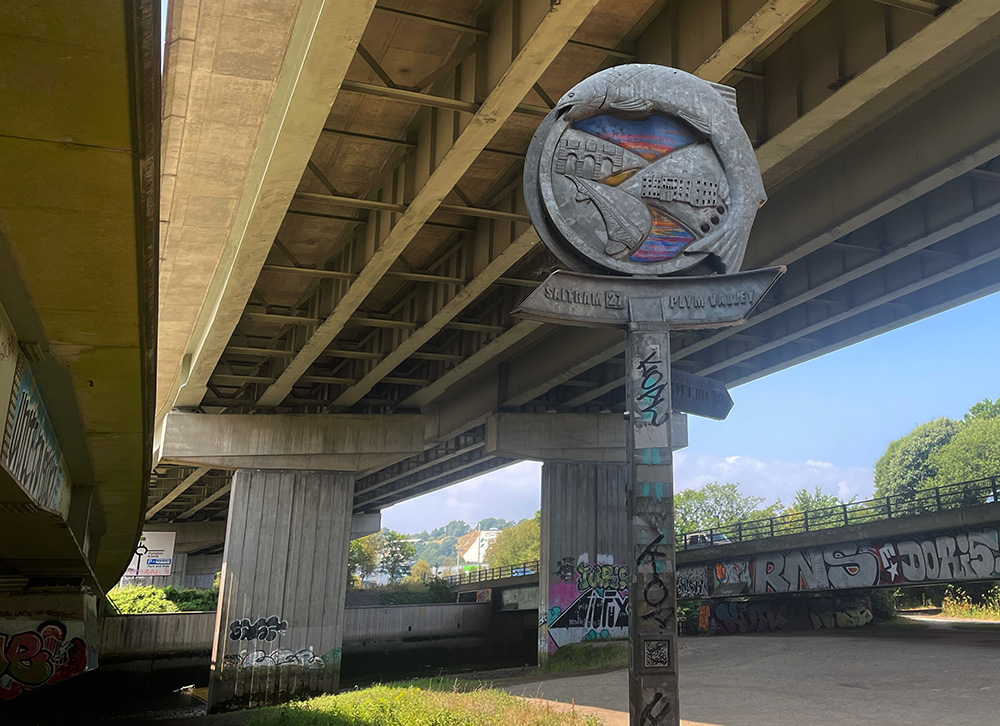
All photos edited by Riley, our work experience student from Liskeard Community School.
Sleep in a railway carriage!
Thank you for reading this article. If you would like to receive occasional newsletters and details of special deals, please sign up here to receive our emails.
To view our website before booking a stay in one of our unique holiday carriages, please visit www.railholiday.co.uk where you will see the full range of holiday accommodation on offer.
We can contacted by phone on 01503 230783 or Lizzy’s mobile on 07776 261192. You can also follow this link to our booking page.